
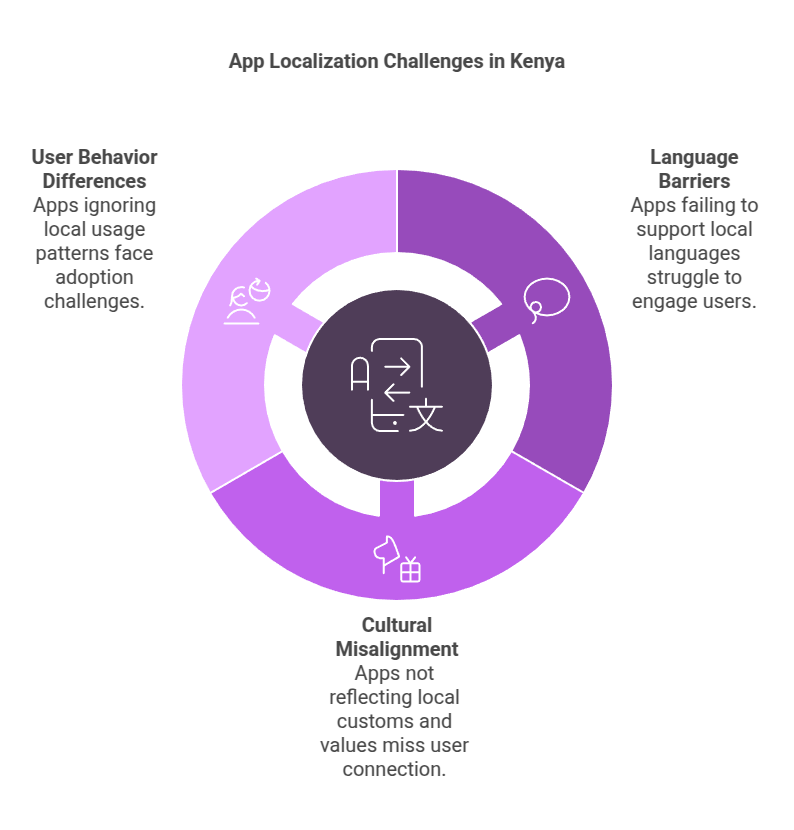
Kenyan mobile apps industry is growing rapidly, with millions of users relying on apps for communication, shopping, banking, and entertainment. However, many international apps fail to connect with the local audience because they don’t cater to Kenyan languages, culture, and user behavior.
This is where localization plays a crucial role. Localization goes beyond simple translation—it involves adapting an app’s content, design, and functionality to fit the preferences, habits, and expectations of Kenyan users.
In this article, we explore why localization is essential for Kenyan mobile apps and how businesses can leverage it to increase user engagement and adoption.
1. Connecting With Users Through Local Languages
Language is a key factor in making mobile apps accessible to a wider audience. While English and Swahili are Kenya’s official languages, many people prefer using local dialects when communicating.
By localizing mobile apps into Swahili and other widely spoken languages like Kikuyu, Luo, and Kalenjin, businesses can:
- Enhance user experience by allowing users to interact in their preferred language.
- Increase app adoption among non-English speakers.
- Improve trust and credibility by showing commitment to local culture.
For example, M-Pesa’s interface includes Swahili instructions, making it easier for millions of Kenyans to navigate the app effortlessly.
2. Customizing Content for Kenyan Culture
Cultural relevance is just as important as language. An app designed for American or European markets might not resonate with Kenyan users due to different values, traditions, and preferences.
Localization ensures that:
- Images and icons reflect Kenyan people, places, and lifestyles.
- Payment options include popular local methods like M-Pesa, Airtel Money, and bank transfers.
- Date, time, and units of measurement match local conventions.
- Festivals and holidays (such as Jamhuri Day and Mashujaa Day) are recognized in the app’s calendar or promotions.
By integrating these elements, businesses can make their apps feel authentic and relatable to Kenyan users.
3. Adapting to Local Payment Methods
Many international apps struggle in Kenya because they don’t support local payment solutions. While credit cards are common in Western countries, most Kenyan users rely on mobile money services like:
- M-Pesa – The most widely used mobile payment service.
- Airtel Money – A growing alternative to M-Pesa.
- Equity Bank’s EazzyPay – A popular mobile banking option.
Integrating these payment options into mobile apps ensures seamless transactions, making it easier for customers to purchase products, pay bills, and subscribe to services.
For instance, e-commerce apps like Jumia have successfully localized their payment systems by incorporating M-Pesa checkout, boosting customer trust and sales.
4. Optimizing for Low-Bandwidth Networks
A large portion of Kenya’s population still relies on 3G and slow internet connections. If an app is too data-heavy or requires high-speed internet, many users will abandon it.
Localized mobile apps must be optimized for low-bandwidth conditions by:
- Reducing app size to save storage space.
- Using lightweight images and compressed videos to minimize data usage.
- Allowing offline functionality for essential features.
- Offering data-saving modes for users with limited internet access.
A good example is Facebook Lite, which was developed specifically for users in areas with slow or unstable internet. Kenyan businesses can apply similar strategies to ensure their apps work smoothly for all users.
5. Localizing Customer Support
Even the best mobile apps encounter customer support issues. However, many Kenyan users struggle to get help because support is often provided in English through email or international call centers.
By localizing customer support, businesses can:
- Provide help desks in Swahili and other local languages.
- Offer live chat and chatbot support for quick responses.
- Use WhatsApp and SMS support, which are more familiar to Kenyan users.
- Include a FAQ section with locally relevant solutions.
These small changes build trust and improve user satisfaction, leading to higher app retention rates.
6. Implementing Local Marketing Strategies
Marketing strategies that work in Western markets might not be effective in Kenya. A well-localized mobile app considers local marketing trends and digital habits to attract more users.
Effective localization strategies include:
- Leveraging influencer marketing – Many Kenyans trust social media influencers more than traditional ads. Partnering with local influencers can help promote an app effectively.
- Using Swahili and Sheng in ads – Casual and relatable language makes ads more engaging.
- Promoting via SMS and WhatsApp – Many Kenyans prefer direct messages over email marketing.
- Running culturally relevant campaigns – Engaging with local events, holidays, and trends increases brand visibility.
A great example is how Safaricom uses localized content in its marketing, making its services more appealing to the local audience.
7. Ensuring Compliance With Kenyan Regulations
Every country has its own legal and regulatory requirements for mobile apps. For an app to succeed in Kenya, it must comply with:
- The Data Protection Act (2019) – Ensuring user data privacy and security.
- Central Bank of Kenya (CBK) regulations – For fintech apps handling payments.
- Communication Authority of Kenya (CAK) guidelines – Governing digital platforms and services.
Failing to localize compliance measures can lead to legal challenges, fines, or even app bans.
8. Addressing Local Security Concerns
Cybersecurity threats are increasing in Kenya, with many users falling victim to fraud and phishing attacks. Locally optimized apps should:
- Implement strong authentication methods like OTP verification via SMS.
- Use secure M-Pesa APIs to prevent fraud.
- Encrypt user data to prevent breaches.
- Educate users on cybersecurity best practices to protect their accounts.
Security should be a top priority when localizing apps for Kenyan users, especially for fintech and e-commerce platforms.
Conclusion
Localization is not just about translating an app into Swahili—it’s about making it relevant, accessible, and user-friendly for Kenyan audiences. Businesses that invest in localization can expand their user base, increase engagement, and gain a competitive edge in the growing mobile app industry.
At TechRahisi, we specialize in developing localized mobile apps that resonate with Kenyan users. Whether you need a Swahili-friendly app, M-Pesa integration, or optimized performance for slow networks, we’ve got you covered!
📞 Call us: +254726572527
📧 Email: developers@techrahisi.co.ke
🌍 Visit: techrahisi.co.ke